


Updates on the latest version and why it’s basically done.
Why v1.0?
For a decade or so, the MicroLab has been in various stages of development. A nascent technological torch passed from one maintainer to the next growing brighter month by month and year by year. What began as a math professor’s idealistic proof of concept has grown into a full-fledged open source undertaking with dozens of contributors and multiple sub-projects.
And now, it’s reached a major milestone.
It’s been built. It’s been tested. It’s been documented. It’s been upgraded and iterated upon. Current-gen models are in the hands of chemists who are developing recipes and putting them through their paces. We do have plans for a few more bells and whistles, but from a core functionality standpoint, we’ve achieved our major goals.
OK. What’s the big deal?
The MicroLab is not super-complicated as far as machines go.
- It stirs.
- It pumps hot or cold fluid to maintain a temperature.
- It pours liquids through an array of peristaltic pumps.
- There’s a small computer that controls those functions.
The real complexity comes when you start to consider all the edge cases of actually doing chemistry in it.
Chemical and thermal tolerances
From the very first prototype, the MicroLab was able to perform chemical reactions. You can also perform chemical reactions by combining two substances in a jar and shaking them around. We know we can do chemistry. The questions we wanted to answer this release were:
“What chemistry can we reliably do?”
and
“How can we expand those possibilities?”
A lot more questions fall out of those two.
- What solvents can the reactor handle?
- How hot can the Reactor Core get without having problems?
- What is the range of temperatures supported by the heat source and the ice bath?

There is a lot to consider, and it mostly boils down to two of the major components: the Reactor Core and the Heat Exchangers.
The core of the matter
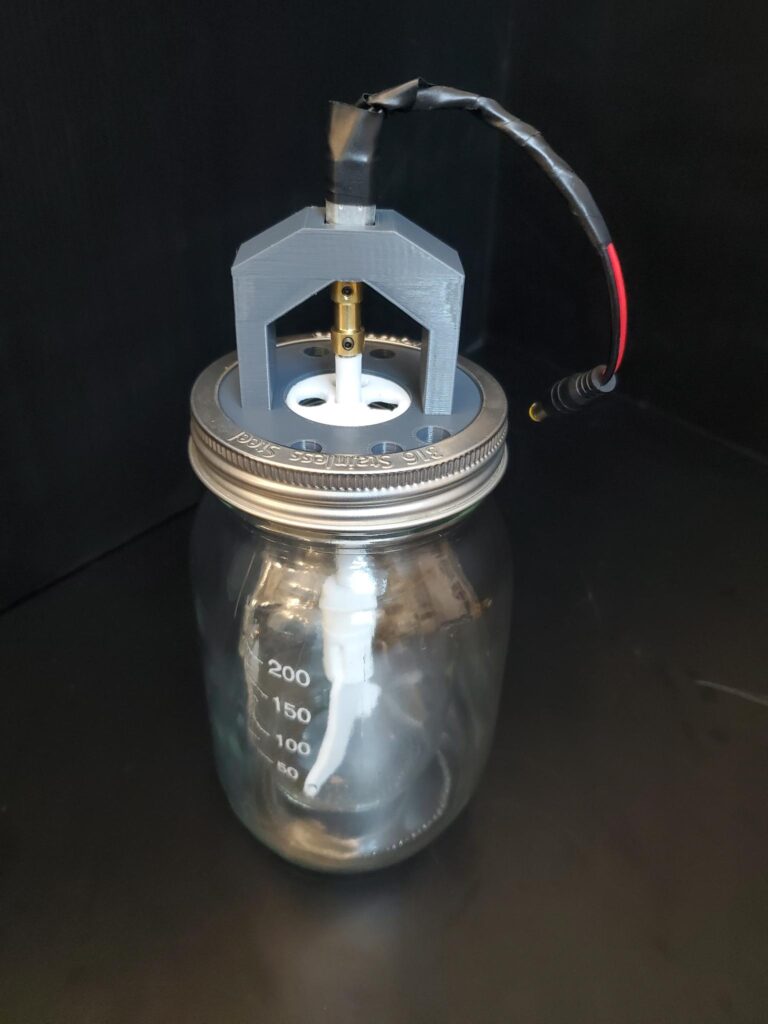
Happily, last year a contributor designed a new Reactor Core. It dropped the inner 6oz mason jar for a 250ml flask, topping it with a PTFE disc that will resist basically all solvents one might want to use. There are also silicone tubes that dispense into the reactor core, but as one of the chemists once said “If you’re messing with stuff that can dissolve silicone, maybe use something else instead.”
In short, the MicroLab’s Reactor Core now supports most solvents that don’t also require a neutral atmosphere (which is a lot of them!)
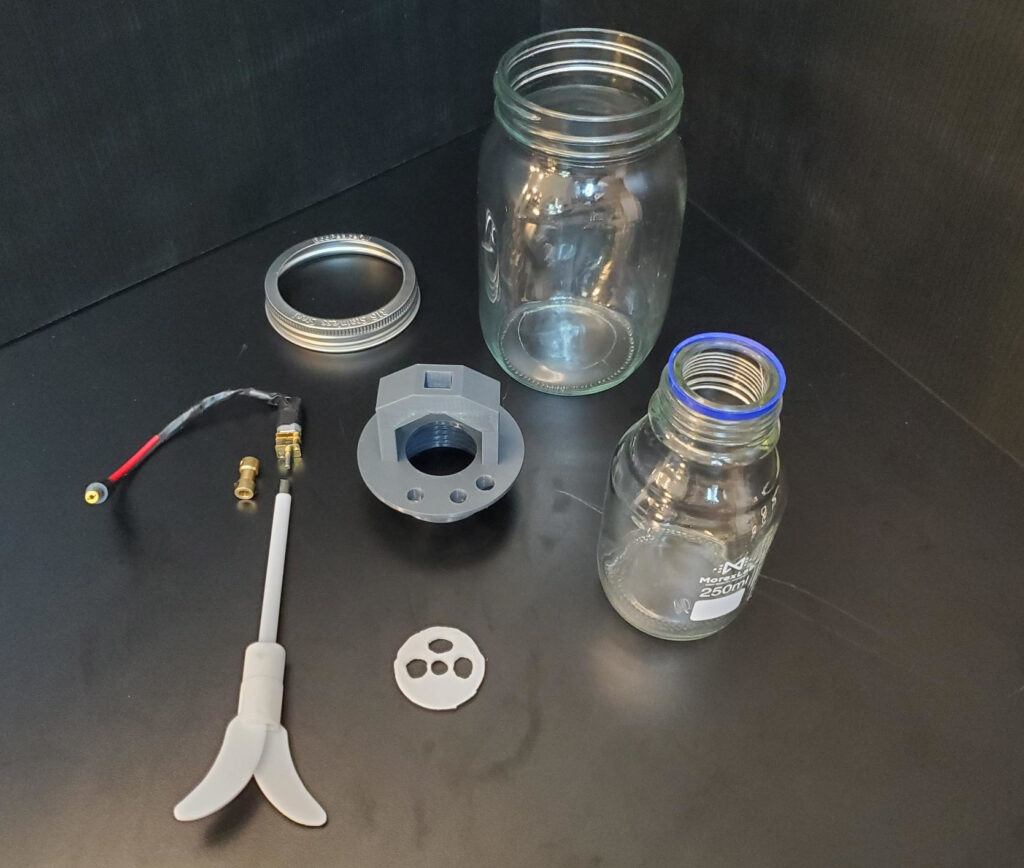
The new design is also much more thermally robust than previous designs. We’re currently testing the temperatures we can support. We need to maintain 120 °C for 12 hours to make Metformin and -10 °C for 18 hours to make Sovaldi*. Wish us luck!
Or better yet, don’t wish. Build one, test it yourself, and tell us what worked for you. Some of the biggest improvements in this version came from first-time volunteers!
* Sovaldi currently also requires atmosphere control, which is on the roadmap, which is below.
Turning up the heat
We also redesigned the heat source completely. In the past we had recommended tea warmers to heat the hot fluid reservoir. This lead to questions of how best to control the heaters and we went back and forth considering performance and safety. We kept thinking “There’s got to be a better way!”
And then it hit us.
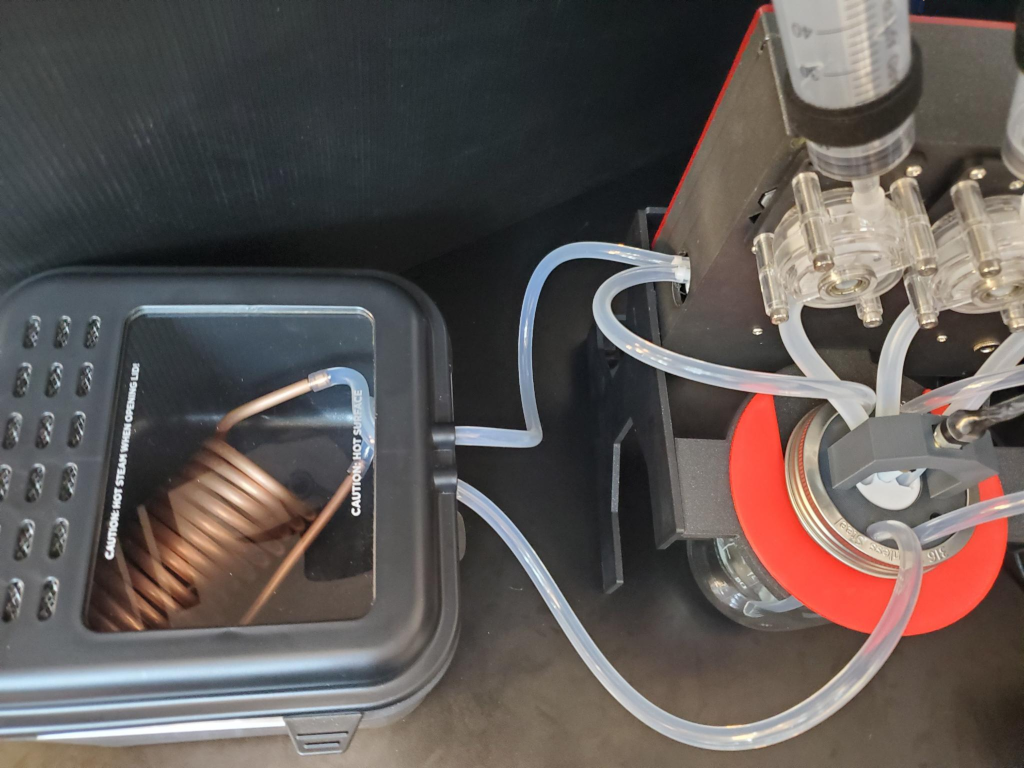
You know what can support high temperatures safely for long periods of time and is designed to hold a reservoir of very hot fluid?
An off-the-shelf deep fryer.
A fryer is a reservoir of hot fluid designed to maintain a temperature of 350 °F (or – if you’re not into deep-fried freedom units – 176 °C). Plenty hot, but safely below the boiling point of the propylene glycol that was our primary candidate for a thermal fluid.
This cheap, available, reliable heat source answered one of the major remaining questions in MicroLab development.
Other bits and bobs
This release also saw major upgrades to the documentation, a better screen, various usability upgrades, a bunch of improvements to the foundational code, and a new disk imager to standardize the build and deployment process. We didn’t just solve a couple of core problems. The whole project has gotten a glow-up / makeover / looksmaxx. (Sorry if that was cringey / awkward / cheugy boomer – we just want to make sure everyone understands how excited we are.)
All of this has been driven by volunteers who believe the world can be better than it is and that we can make it so. We want to thank them profusely for pushing the limits of human possibility beyond where they had previously been.
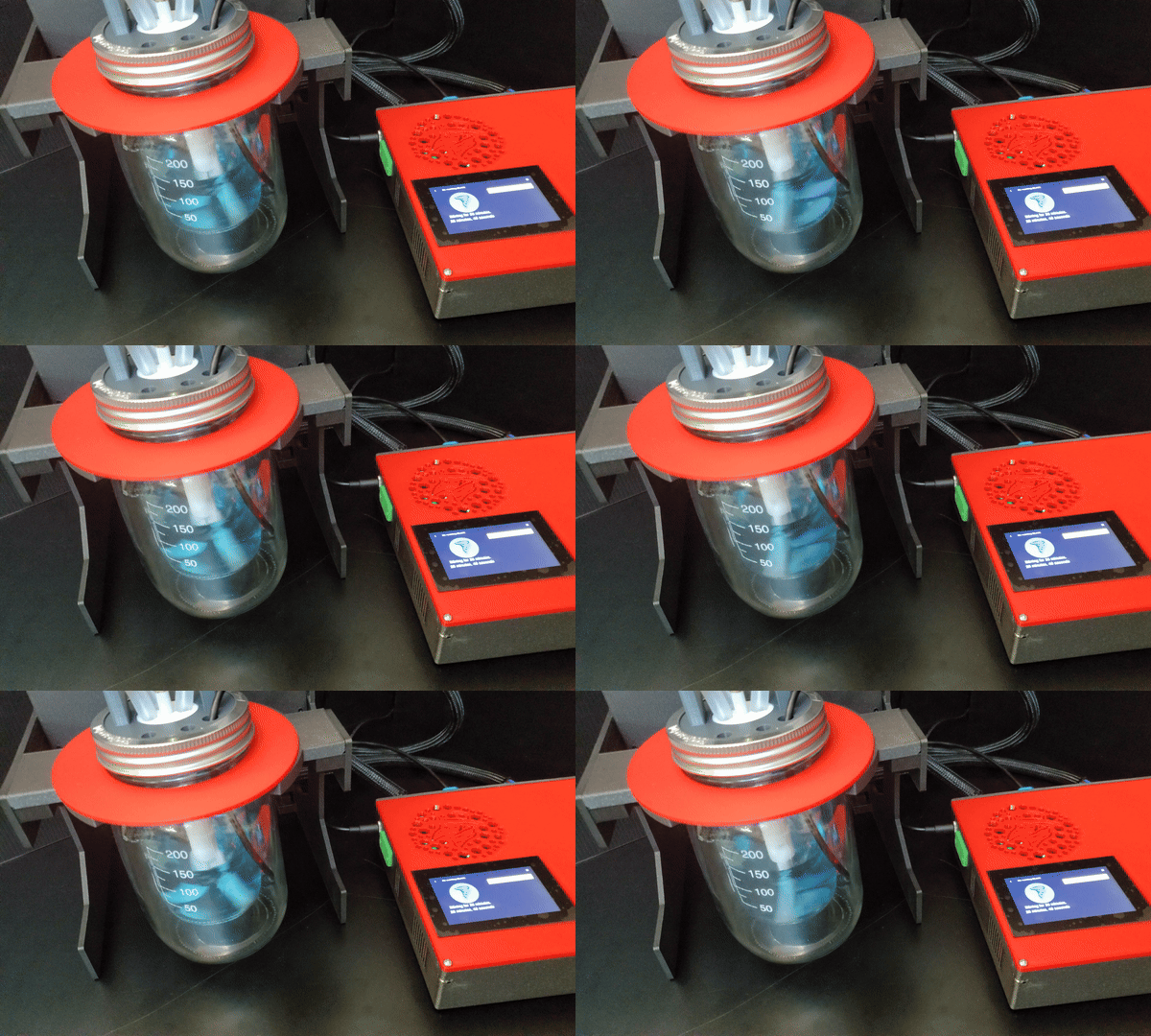
Will it ever stop? Yo, I don’t know.
We believe these updates allow us to largely fulfill the original promise of the MicroLab. Over the next year, we will be writing, testing, and publishing recipes on our wiki. Drop us a line if you’re in a position to develop and verify “recipes” (reaction protocols).
Or develop, document, and publish your own!

We mentioned the roadmap above, so here it is. This is what we’ve accomplished and what there is left to do. More details are on the development wiki, if you want to dive deeper into what we’re plotting. Atmosphere control is on there, as are further internationalization, and development of open source alternatives to some of the off-the-shelf parts that are pricey or harder to source.
Until next time
There are more updates coming for other projects, so stay tuned.
Until then, remember that we have more power than we often think we do.
The MicroLab belongs to all humanity – as all knowledge should. We believe version 1.0 makes a wide range of small-molecule organic chemistry available to most people who can spare a few hundred dollars and turn a few screws. As a blue superhero from back when the US briefly cared about the environment used to say:
“The Power is Yours!”
Keep each other healthy. Keep each other safe.