

The Finding Out to
the MicroLab’s Fucking Around
We are excited to announce our latest project which had its debut December 2024 at the 38th Chaos Communication Congress.
Introducing the AnaLickTickle Suite
For years, we at Four Thieves have tinkered and toiled to make open-source science and DIY medicine a reality. With this summer’s release of the v0.6.0 MicroLab and the developments since then, at-home automated chemistry has continued to make steady advances. Today, we’re announcing the next theater in our campaign make science accessible: a collection of analysis tools we’re calling the AnaLickTickle Suite.
Starting with Simplicity

The first announcement is the v1.0 release of the Simple Melting Point Tester – an inexpensive tool that provides a basic way to test a material sample of unknown purity. It is the first tool in the AnaLickTickle Suite to be completed and documented for public release. The “SMelter” is a dirt-cheap, dead-simple way to assess whether a material you have is what you think it is. Just slowly turn the temperature up, and see if your sample turns to liquid when it is supposed to.

The parts cost between $20 and $30. Assembly and operation are a snap. Instructions are live at our GitHub with photos and explanations for both construction and use of the tool. Check it out!
Off-the-shelf Solutions
You can use reagents sold by harm reduction projects like DanceSafe to test a variety of 🏳️⚧️ interesting 🏳️⚧️ materials. These tests are intended for testing recreational drugs, but they react with functional groups across a wide array of chemicals, providing another way to identify your substances.
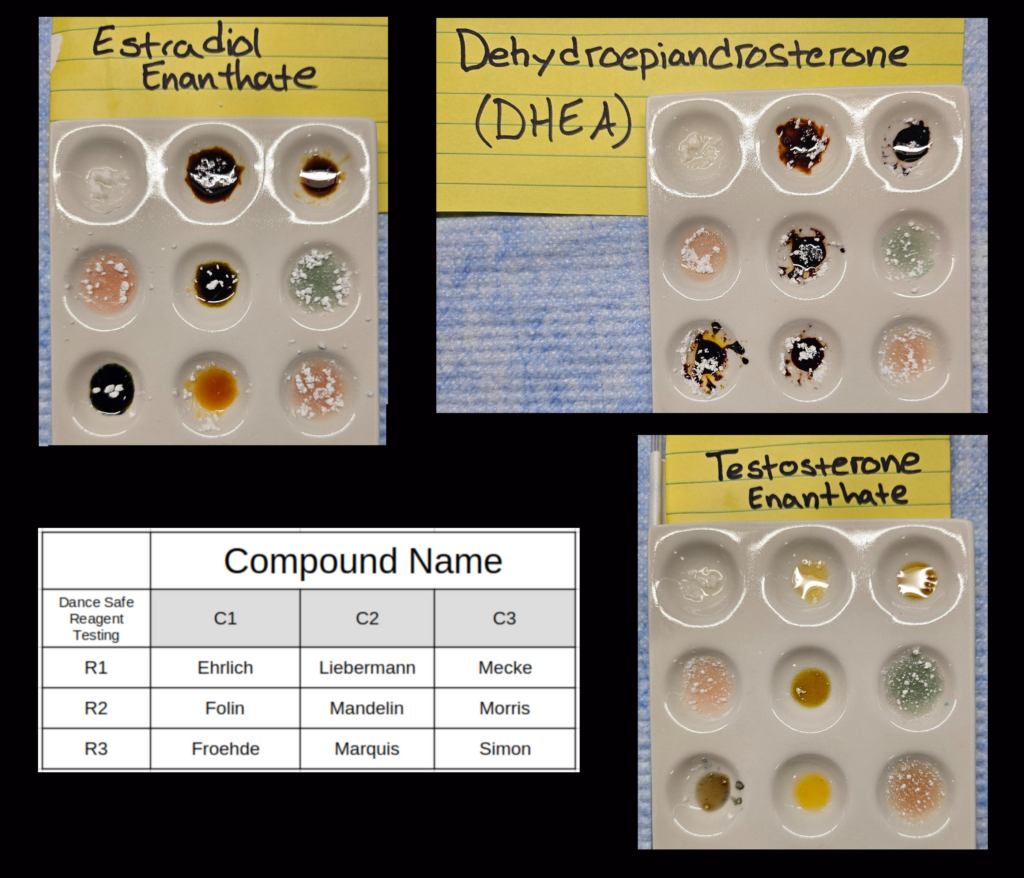
Reagents kits are available at the DanceSafe website for around $120. Testing a small sample only requires a drop or two and the kits can last for years if properly handled and stored. This affordable, off-the-shelf solution is another tool in the DIY science toolbox.
Getting Fancy
Of course, there are many more techniques for chemical analysis. We’re coming out with a whole collection of projects that will help practitioners of DIY medicine have confidence in what they produce and compound. Currently on the way are:
More Melting Point Testing: We’re developing a Fancy Melting Point Tester powered by a microcontroller that is comparable to commercial models (while still being orders of magnitude less expensive). It’s based on the same principle as SMelty up there, just with a few extra bells and whistles.
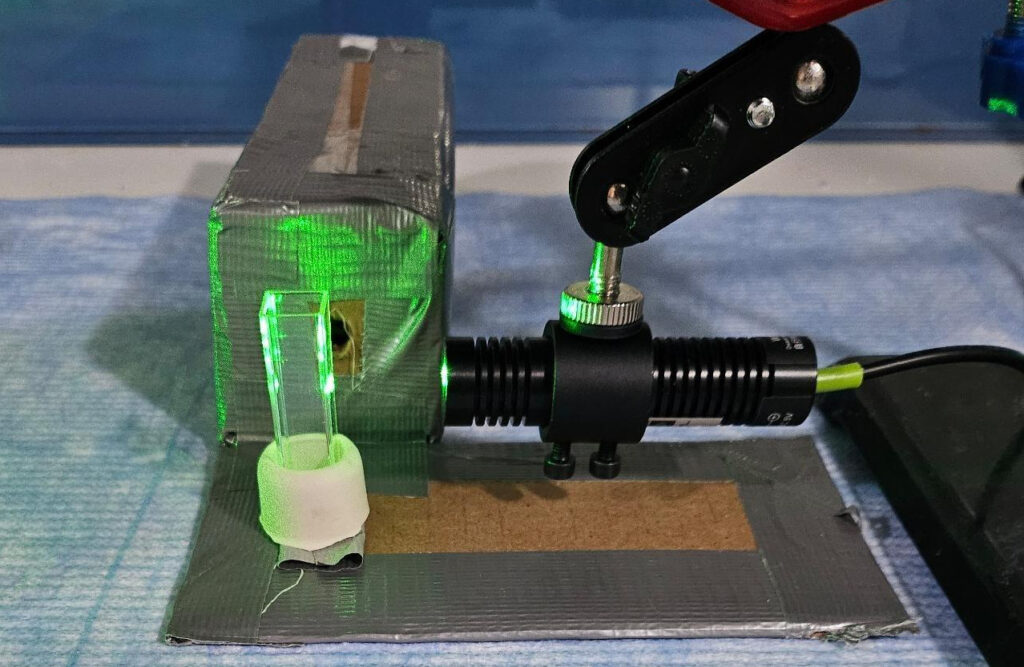
Spectroscopy: We’re building, testing, and refining smartphone-based spectroscopy tools, which are a game-changer for DIY chemical analysis. We’re still writing up docs for DIYers and optimizing our designs for robustness and affordability, but we’re not the only group developing tools like this. If you want to be a developer or early adopter, use the preceding link or reach out to us and join our crew!
Expanding Possibilities
At-home spectroscopy, coupled with simpler tests, along with the increasingly-powerful MicroLab CLR are putting accurate, verifiable, organic chemistry within reach of anyone with about $800, a friend with a 3d printer, and the ability to turn a few dozen screws.
Haters love to gloat that 🔬 science 🧪 belongs to 💰 capital 🤑 and that analysis tools require million-dollar budgets. They want to ignore the long history of self-made scientific tools so they can keep the promethian fire for their bosses and shareholders.
They say it can’t be done.
We are excited for them to be wronger than they’ve ever been before.
Until next time, keep each other healthy and keep each other safe.
🏴🏴☠️💊💉🧪🧬⚗️🔬🏳️⚧️